Aside from interconnected cinematic universes, there’s nothing the film industry loves more than a celebration of itself. Alongside the endless back-patting of awards season, there are numerous movies that dramatise the making of an all-time great: Hitchcock chronicles the making of Psycho, The Disaster Artist recaptured the chaos of The Room and Saving Mr Banks showed us the origin of Mary Poppins. Now, it’s the turn of French cinema and a movie that launched a movement.
Nouvelle Vague digs into the making of Breathless, the 1960 crime drama that launched French New Wave (or Nouvelle Vague in French). Guillaume Marbeck stars as Jean-Luc Godard, a film critic for the influential magazine Cahiers Du Cinéma who grows insecure after seeing his fellow writers make the transition to directing.
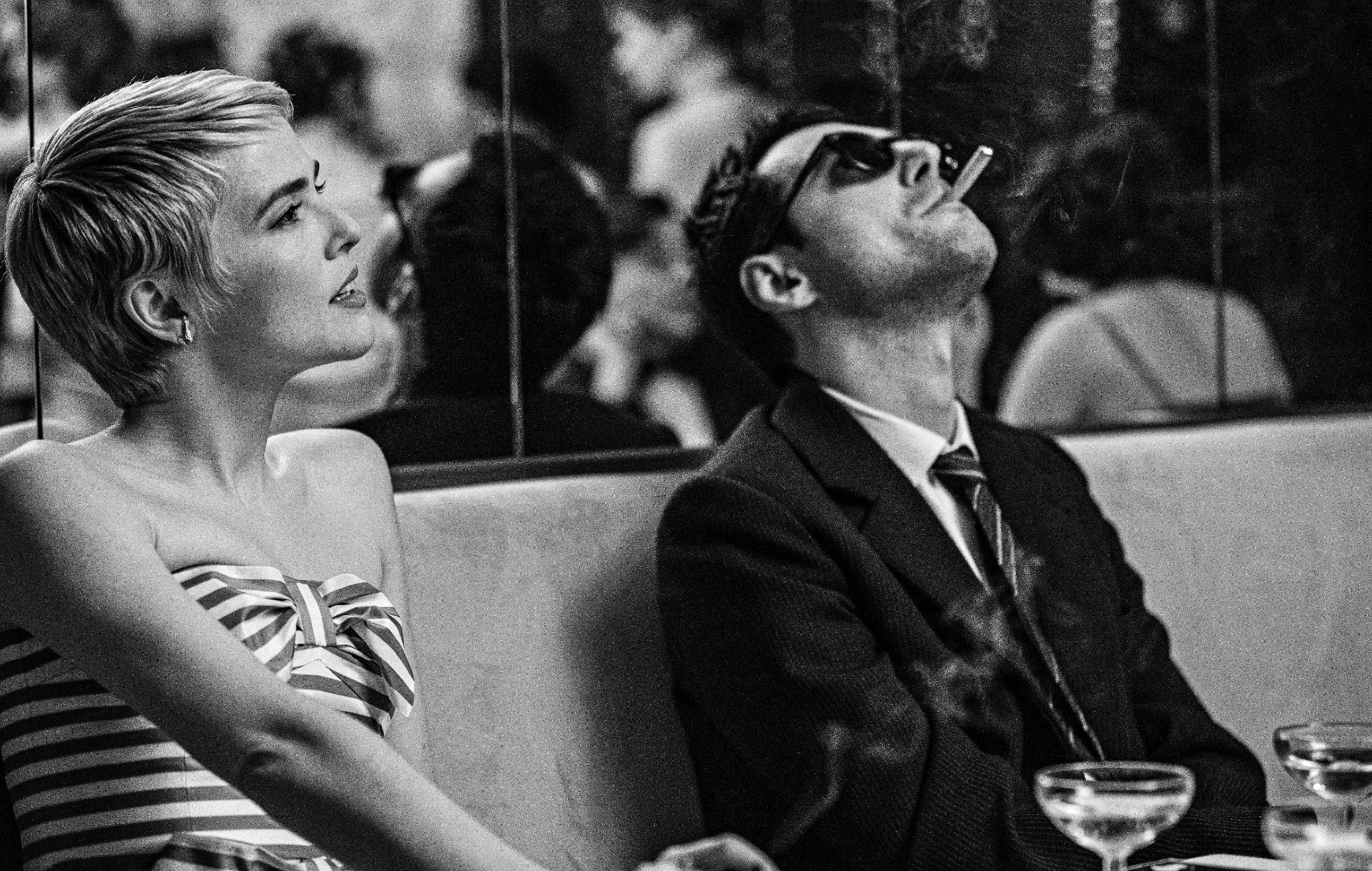
He finds his project in À Bout De Souffle, aka Breathless, a story based on an outline by his filmmaker friend François Truffaut (Adrien Rouyard). Casting future legends Jean Seberg (Zoey Deutch) and Jean-Paul Belmondo (Aubry Dullin), the film’s chaotic shoot sees Godard’s perfectionism causing delays and tension. With his reputation on the line, he must fight against increasing pressure to make his masterpiece.
Nouvelle Vague is made with the precision of a super-fan. Linklater uses authentic camera lenses from the time periods and casts actors who fit their real-life counterparts perfectly. While the director behind School Of Rock and Dazed And Confused might seem like an odd choice for such an arty subject, he is clearly dedicated to making a movie that replicates the style of that time. Exchanges are off-the-cuff, and Paris is transported to another era.
Much like 2020’s Mank, about the writing of fellow masterpiece Citizen Kane, it’s a dream for film buffs – each pivotal figure is introduced with the kind of awe they deserve. Delving into the shoot, particularly the tension between Godard and Seberg, provides a fascinating window into how genius can often be messy.
The film doesn’t provide any apologies for the filmmaker, instead showing Seberg’s side of the story more prominently, but it does make both of them more complex thanks to excellent casting. Marbeck is much more than an impression of the great man, weaving in the insecurities of someone who is yet to prove himself, and the determination of someone who sticks rigidly to their vision.
Not every lesson is learned, and the film never concludes whether his behaviour was justified given the result. Linklater isn’t after scandal here, instead he marvels at how something so totemic can be created through an artist who is still finding his feet, and sometimes making it up as he goes along. Meanwhile, Deutch offers the strongest performance of the film, taking the icon that Jean Seberg became and making her more human. An outsider culturally as well as artistically, her portrayal prevents the film from becoming a stiff making-of story, going beyond the superficial portrait offered by Kristen Stewart in 2019’s Seberg.
If you’ve never seen Breathless, or have no love for the French New Wave, Nouvelle Vague may leave you lost. However, cinephiles will absolutely adore this nostalgic recreation of a moment that ignited a passion for movies for millions.
The post ‘Nouvelle Vague’ review: dramatic love-letter to French New Wave is perfect for film nerds appeared first on NME.