
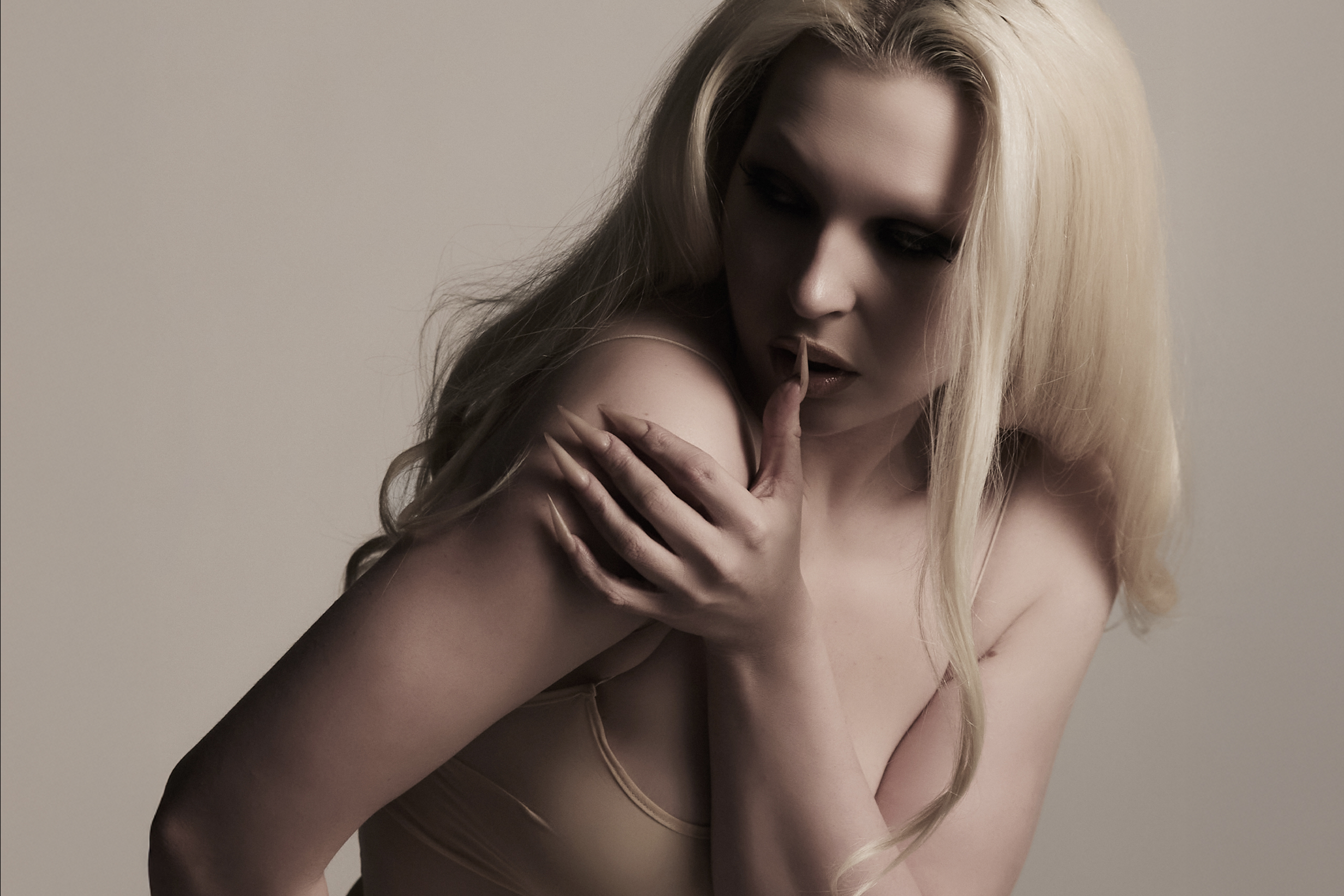
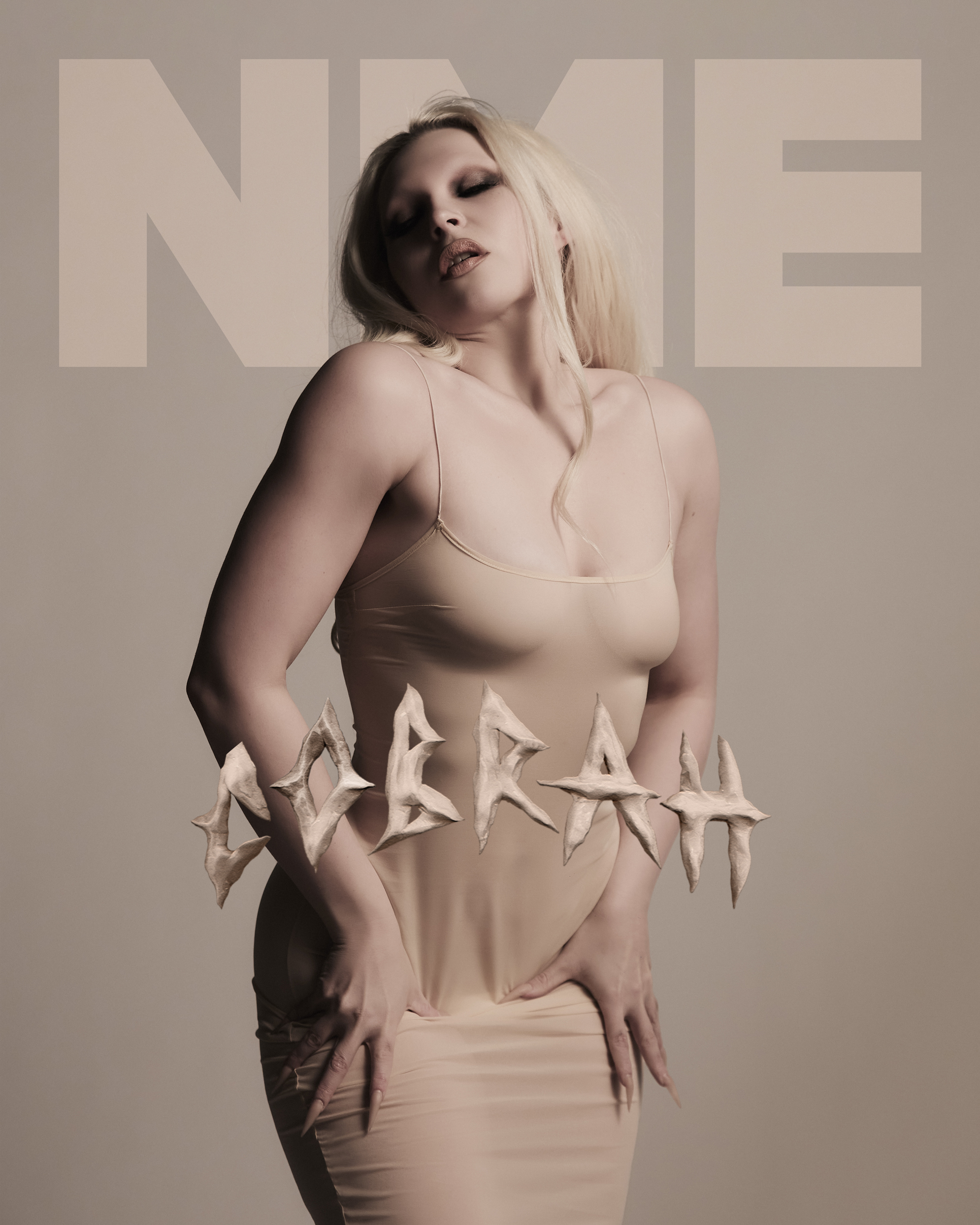
Lately, COBRAH has been thinking about metamorphosis. Taking stock of her own artistry – an endeavour in control, domination and the celebration of female pleasure on bolshy club tracks like ‘Brand New Bitch’ and ‘Mami’ – the Swedish singer is wondering what it would mean to operate with a softer touch. It’s an intriguing proposition for an artist at the heart of Stockholm’s musical avant-garde, and one that strikes at the core of her erotically charged tunes. “There’s something really powerful about being a femme fatale,” she tells NME, “and something extremely sexy and intriguing with showing a little pain and a little love.”
It’s this convergence and desire for honesty that explains much of the 29-year-old musician’s drive to create. It’s a magnetic pull COBRAH – real name Clara Christensen – has felt for as long as she can remember. “I still feel it now,” she says in her signature icy cadence. “It’s like when you fall in love in the beginning, and you can feel it in your body all the time.” Pursuing this connection, the Gothenburg native took up piano, guitar and flute from an early age, and as a teen turned to musical theatre and played in a succession of local bands, inspired by the punky credentials of the Dresden Dolls’ Amanda Palmer. “I thought maybe I was going to be a performer. And then I had a feeling that I wasn’t meant to recreate works, I was meant to create them myself.”
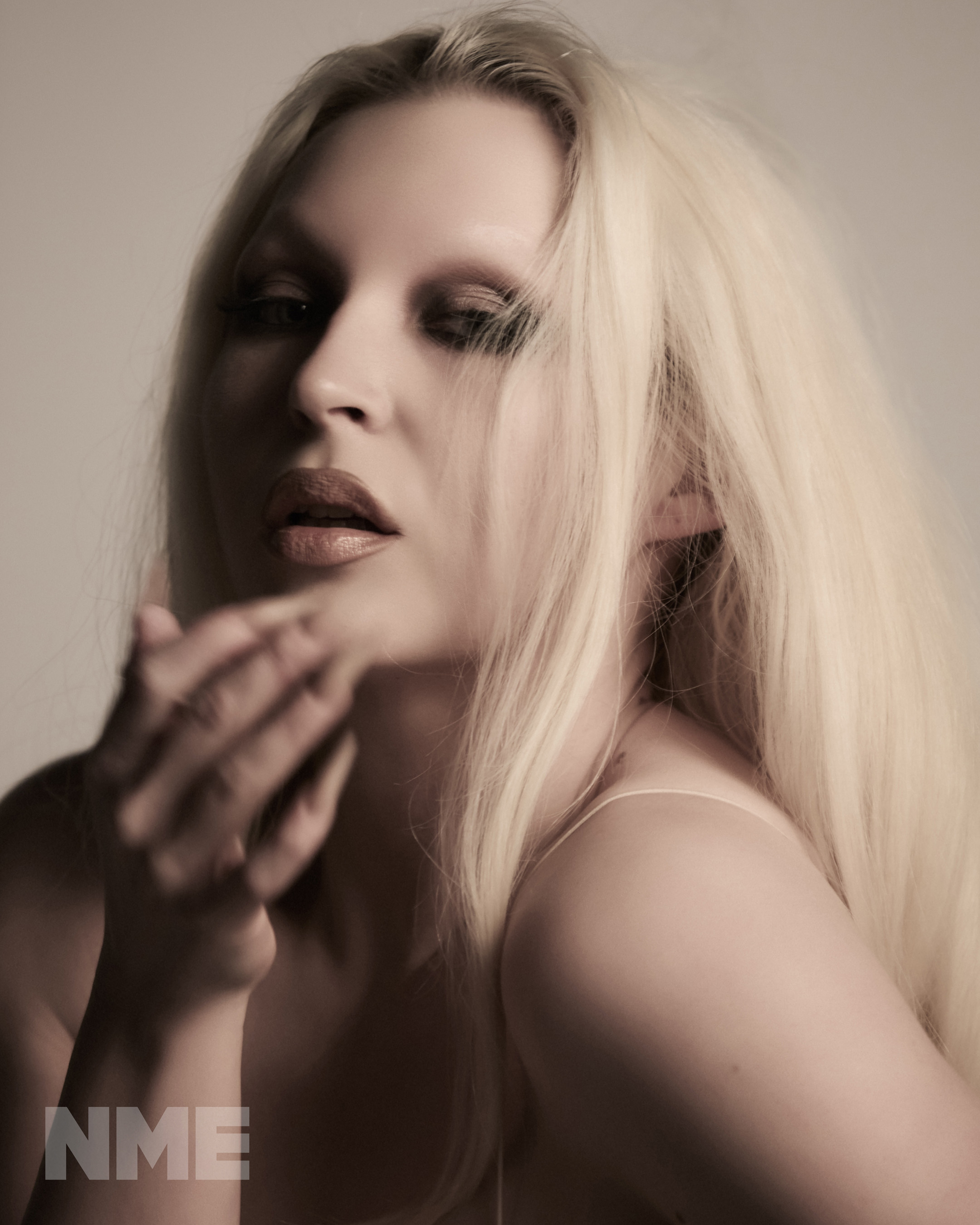
Instead of drawing from Sweden’s more famous pop exports – Ace Of Base, Robyn, ABBA – Christensen’s musical education came from a burgeoning overseas electronic scene, such as releases from Skrillex’s OWSLA label, as well as a rotating cast of bands on the Stockholm alt-metal scene. “I was never a Britney, pinky-pop girl in that sense, that kind of happened later in life,” she says. “When I started doing COBRAH, it was more on the avant-garde and experimental spectrum, but I started to find the more I did music, the more I came to appreciate pop and lean into those kinds of Max Martin structures with verses and choruses.”
While a brief stint in Berlin as a student would give her a taste of the BDSM world later featured so breathlessly in her music (and even her uniform of spiky leathers and glossy latex), Christensen found true community in the sex clubs she frequented across her home city. She describes finding this scene, which hosted many of her early performances, as “pivotal” in the incubation of her artistry and penchant for rattling club beats. “You realise very quickly you cannot force where you resonate,” says the singer. “I feel very bonded to that scene, it was there I could try and explore and try things out.”
Something more pivotal still for Christensen happened in 2017, when she found a trusted collaborator in producer Hannes Roovers, who has since worked with the likes of Xiu Xiu and Rebecca Black. Some heavy experimentation on demos for other artists, where the duo would work off writing briefs, would eventually derail into ‘IDFKA’, Christensen’s first single – a blend of minimal beats, repeated phrases, minor scales and explicit nods to sexual pleasure that formed the foundations of her sound. “It was kind of the birth of COBRAH, because I felt like it was tapping into something that I hadn’t tried before,” she recalls. Even her alias is lifted from its snarling opening gambit: “Lift my head up high, like a cobra”.
“I wasn’t meant to recreate works, I was meant to create them myself”
Several club-led stompers followed on her self-released debut EP, 2019’s ‘Icon’, veering from hedonistic musings on drugs and club hopping (‘You Know Me’) to the darker pleasures of sex (‘Glue’), netting the singer a loyal fanbase among ravers and primarily LGBTQIA+ stans online. “After I released that EP I was gonna play at SXSW, I remember being like: ‘Bye everyone! I’m gonna be a star!’” she laughs, tufts of her Marilyn Monroe-esque roller curls tumbling into view. “But then the pandemic happened.” Christensen ended up staying in Stockholm, quitting her full-time job as a primary school teacher to tackle music head-on.
The course-correction that followed would birth her bold, brash and deliciously filthy self-titled 2021 EP, which featured the standout single ‘Good Puss’. The momentum from these releases would notch COBRAH a spot on the NME 100 in 2022, where ‘Good Puss’ was celebrated as a “huge dancefloor mainstay”. Years on, the track has endured as a cornerstone of queer club nights and boozy pre-drinks, and serves as a reminder of the earworm alchemy COBRAH brings to the pop scene. “I’ve never woken up and been like, ‘Oh, I’m gonna make it’,’ she considers, “but I feel like every day I’m getting a little closer to that feeling.”

Before the release of her last EP, ‘Succubus’ in 2023, inklings of a larger project had begun to take shape. It was a creative itch that COBRAH was dying to scratch. “I’d always wanted to make an album, and the stars had never aligned for that opportunity,” Christensen says. “Then, when I finally got to do it, I felt like the culture was catching up to me, I was on people’s mood boards…” she drifts off. “At first I was really annoyed. And then, when I was gonna make more music, I thought: ‘Fuck it. I’m over myself, I’m ready to move on.’ If the world has caught up to what I’m doing, then I’m clearly not doing the thing I’m intended to anymore.”
This shift in thinking would go on to form her debut album’s title track, ‘Torn’, a cross-examination of the push-and-pull the singer felt about inhabiting COBRAH, the character, after all these years. Across flourishes of slow synths and deconstructed techno, her musings spin a tale of inner conflict (“Why do these thoughts at night keep washing in? […] Why don’t I know what I should do?”) acted out by duelling selves. In the accompanying video directed by Julius Hayes, the two COBRAHs flit from possession to embrace, foreplay to rejection, before only one is left on the edge of suffocation, a darker self watching on.
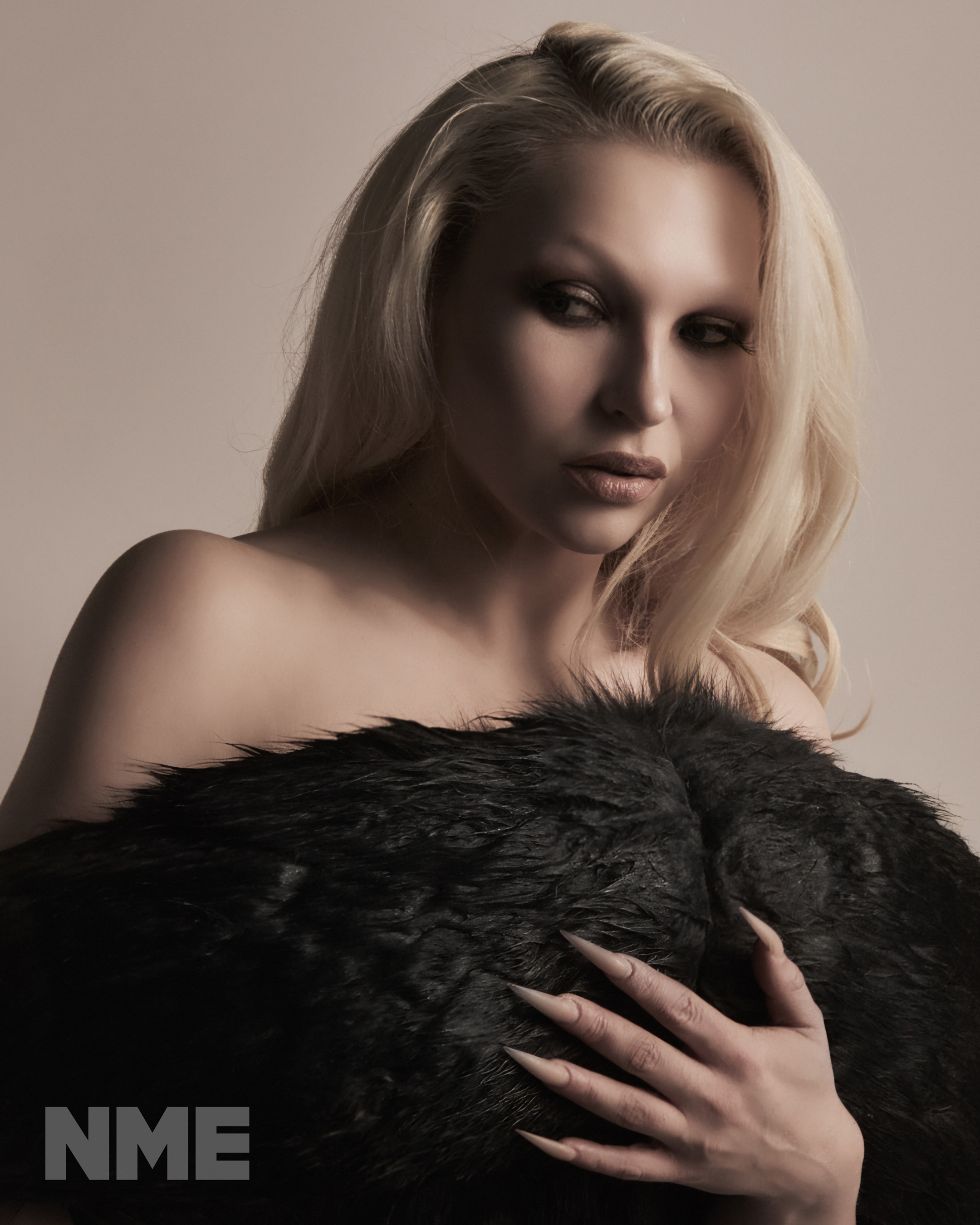
‘Torn’, the gritty and uncharacteristically personal album, continues to carry the torch for this metaphoric skin-shedding. It finds inspiration in the beauty of growing pains and treading new paths, while reckoning with the bravado-packed BDSM-pop of her earlier work to reveal the artist behind the domme. “I’ve always been slightly afraid of putting myself personally into my art and maybe that my own life wasn’t good enough to write about, or not interesting to listen to,” she says, “but with ‘Torn’ I’ve really tried to switch it back. COBRAH is what I feel and do, not the reverse.”
“There’s something extremely sexy and intriguing with showing a little pain”
To call the project a total rebirth would be misleading, as the album still pumps with plenty of industrial grit on club-ready bangers like ‘Platinum’ and ‘Excuse Moi’. But here too are experiments that take an axe to heart-raising BPMs in favour of the strung-out, some so hauntingly left-field – such as ‘Charming’ – they were nearly left on the cutting-room floor. That song is part of a handful of outliers that explore love’s trickier sides, along with ‘Dog’, which trades in themes of dark romance and dreams of the domestic. Lines like “I wanna house, up on the hillside / I wanna die together, you just wanna feel right” offer surprising moments of candour.
At a time when sexual liberation in the mainstream feels increasingly on the wane, thanks to attacks from the conservative right, COBRAH’s abrasive, pleasure-seeking anthems feel more important than ever. And while ‘Torn’ may depart from the more overt trappings of the ‘BDSM-pop’ moniker for which she is known for, Christensen’s softer touch doesn’t come without its harder edges. “What’s important to me when I make music is that it comes from a place of dominance, of confidence and fun,” she says, “I want to make really beautiful things that tingle me. And I think being sexy – and especially being in charge and being sexy – really tingles me.”
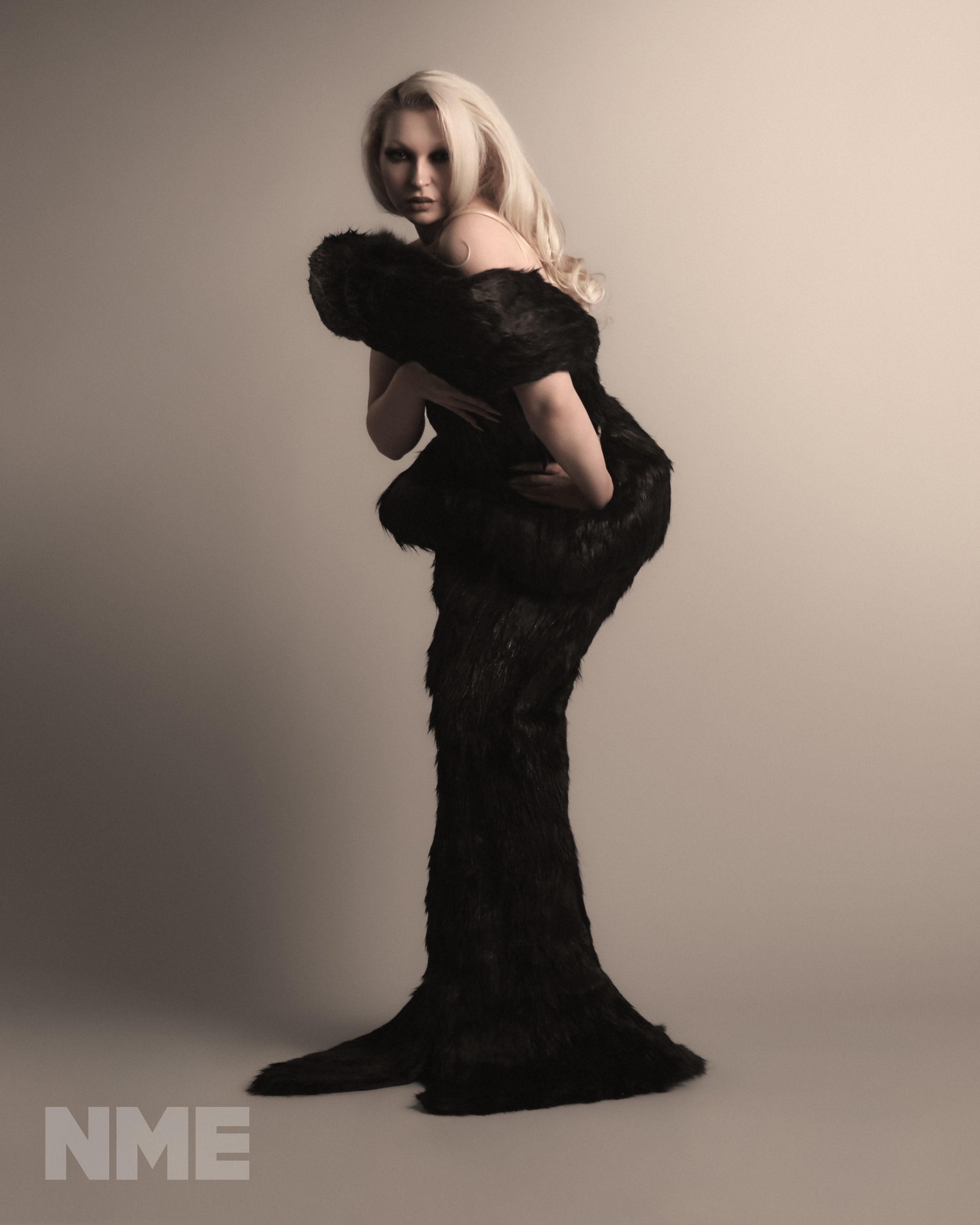
With the challenge of completing her debut album now well behind her, COBRAH has her sights set on letting ‘Torn’ play out on stage in 2026. Plans for an upcoming tour, netting some of her biggest audiences to date, have encouraged the artist to think bigger in all aspects. Ahead of her Coachella debut later this summer, Christensen teases an ambitious lean into the theatrical passions of her teen years, stepping away from the booming sound systems and rave-ready BPMs dominating her club performances and instead slipping into the role of storyteller.
It’s a move that will put her popstar credentials to the test, tenfold: “My ambition is to make it a performance that you live with and think of, that has a purpose,” she says, “so it’s been exciting to approach life that little bit more detail-oriented.” Though that isn’t to say club-rat COBRAH is going anywhere soon; in fact, she bristles at the thought. “I don’t think music is linear like that, I’m becoming wider as a musician and even more multifaceted in the way I write and create,” she says, her softer cadence now wholly defiant. “I haven’t closed the door on anything – I’ve opened up so much more.”
COBRAH’s ‘Torn’ is out March 6 via Gag Ball / Atlantic Records.
Listen to COBRAH’s exclusive playlist to accompany The Cover below on Spotify or on Apple Music here.
Words: Bailey Slater
Photography: Julius Hayes
Makeup: COBRAH
Styling: Ana-marija Knezevic
The post Swedish pop dominatrix COBRAH is shedding her skin and starting anew appeared first on NME.