
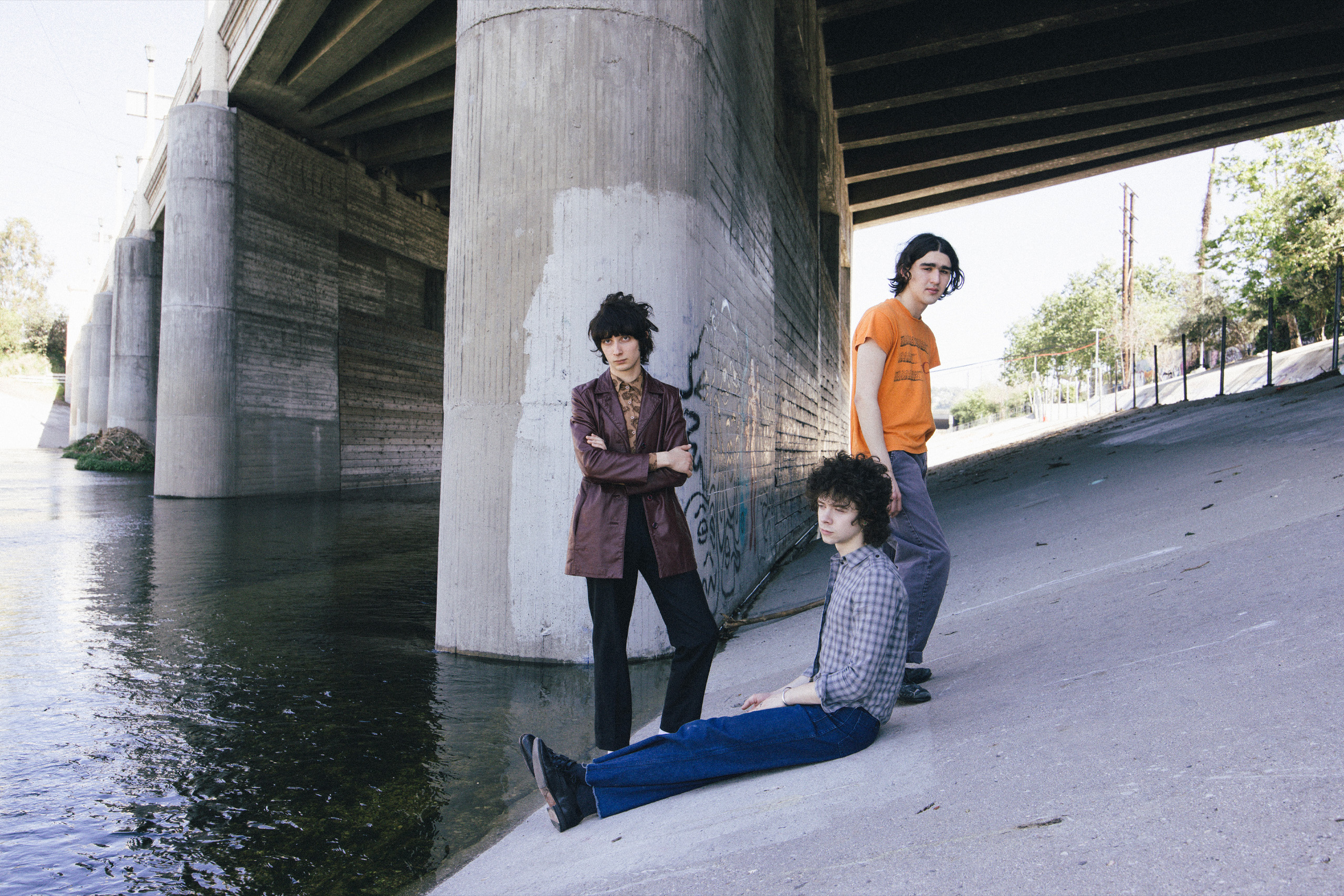
Asher Case hunkered down in the backseat of the car with an X-Acto knife. As the miles between Chicago and New York fell away, Lifeguard’s bassist cut and assembled J-cards for a limited run of cassettes they planned to sell for $5 at the merch table during an east coast run opening for London indie-rockers Bar Italia. Its songs, 11 of them dispatched in a 13-minute blast of scuzzy melody and dubby connective tissue, were brand new, having been written and recorded to eight-track tape at their rehearsal space in the days leading up to the tour.
“It’s done, and we want to put it out right now,” Case recounts over Zoom, cheek-to-jowl on a sofa with their bandmates the morning after a show at Zebulon in Los Angeles. “The whole philosophy was: this is our instinct, and we’re acting on it – we want this to be as scrappy as it sounds, as immediate as it sounds.”
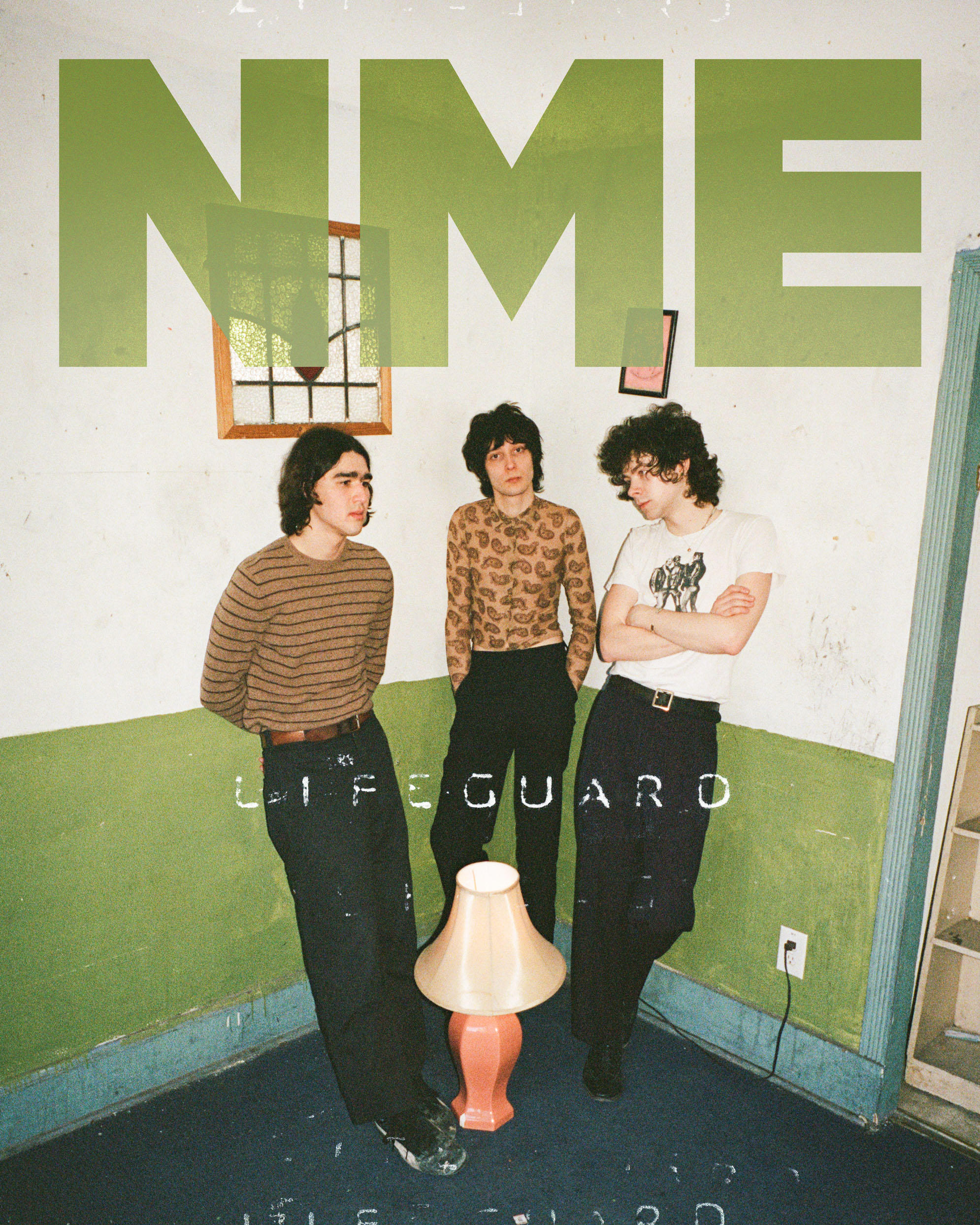
This scene is Lifeguard all over. They are impulsive, determined to do things on their own terms and in many ways, an exciting anachronism – a reminder of the foundational processes of American indie rock, when bands could parlay local cred, access to a photocopier and a fistful of great songs into something that mattered. Something that could light a fire in kids thousands of miles away because of the way it resonated, the way it looked, or because of an evocative return address scrawled on the back of a tape. “Nothing geeks me out more than seeing someone make a wonderful, full representation of their music beyond just, like, files,” guitarist and vocalist Kai Slater says.
Six months later, the same artwork that Case chopped and glued in the backseat has been splattered all over a seven-inch maxi single release through venerable indie label Matador, the music straining against the confines of the format. Orbiting twin title tracks called ‘Ultra Violence’ and ‘Appetite’, it feels like both an extension and a refinement of the noise-punk racket the youthful trio cooked up on last year’s superb debut album ‘Ripped and Torn’, straddling the line between Big Star jangle-pop and Alex Chilton’s later adventures in weirdo no wave. “Take ‘Ripped and Torn’ and hammer it on all sides until it’s a silver ball” is drummer Isaac Lowenstein’s take, but there’s more to it than that.
“The whole philosophy was: this is our instinct, and we’re acting on it” – Asher Case
The single is another flex for Lifeguard: something wilfully difficult that doubles as a representation of their principles. As cool as the people at Matador have been to them, Slater says, they knew that this project would be a hard sell. “When we sent it to the label, we got the exact response we wanted: ‘This is going to do very poorly – the algorithm’s really going to dislike this,’” he says. “Then they said: ‘How are we going to playlist this? It’s confusing, no one knows what a maxi single is, and these songs are 11 seconds long, so they won’t even track on any databases.’ And we were like, ‘You read our mind.’ We hate that algorithm. We hate all of those rules.”
And he’s not just gobbing off. Lifeguard formed in 2019, when a chance encounter with Case and Lowenstein at an open mic shocked Slater out of a hermit-like bedroom approach to making music. They’ve since helped to build a community-focused scene in Chicago that’s become the envy of indie hubs worldwide. Alongside their peers in bands such as Horsegirl and fellow NME Cover act Friko, they have balanced innovation and grimy cool with an emphasis on the importance of putting on for your hometown and the people creating worthwhile things in your backyard. “I do feel like our city is one of the best places to see live music in the country right now,” Lowenstein says. “That has nothing to do with what I’m playing. There’s a ton of awesome records being made – as a music fan, if I wasn’t in Chicago, I’d be like, ‘I need to go to Chicago.’ The famous music communities were super inspirational to us from a young age.”

Having come up in the same city that reared Touch and Go, the zine-turned-label that put out records by Negative Approach, Slint, Big Black and the Butthole Surfers in the ’80s and ’90s, Lifeguard studied blueprints laid out by the Elephant 6 satellite scene in Athens, Georgia and the punk sprawl of Olympia, Washington. Increasingly, they look like musicians first and documentarians a close second. Slater runs the zine Hallogallo from his apartment (its name references a seminal NEU! song that reverberates through Lifeguard’s more motorik writing) while the band also recently had a hand in ‘Red Xerox’, a comp helmed by their close friend Eli Schmitt that sought to tell the story of modern Chicago DIY in real time, safe in the knowledge that a billionaire tech bro can’t banish a zine, seven-inch or cassette from existence on a whim. “Please join us,” Slater wrote in its liner notes. “The future is yours and mine.”
“When [Hallogallo] started, I felt it was essential to have some kind of platform that was non-algorithmic and based around a physical medium that could express information,” he says. “I really like the idea of going underneath any social media or digital information. I think zines are never going to lose that; they’re only going to get more essential in the [current] landscape of America. You can see it all starting to go down the drain in terms of censorship and the hold it has on expression.”
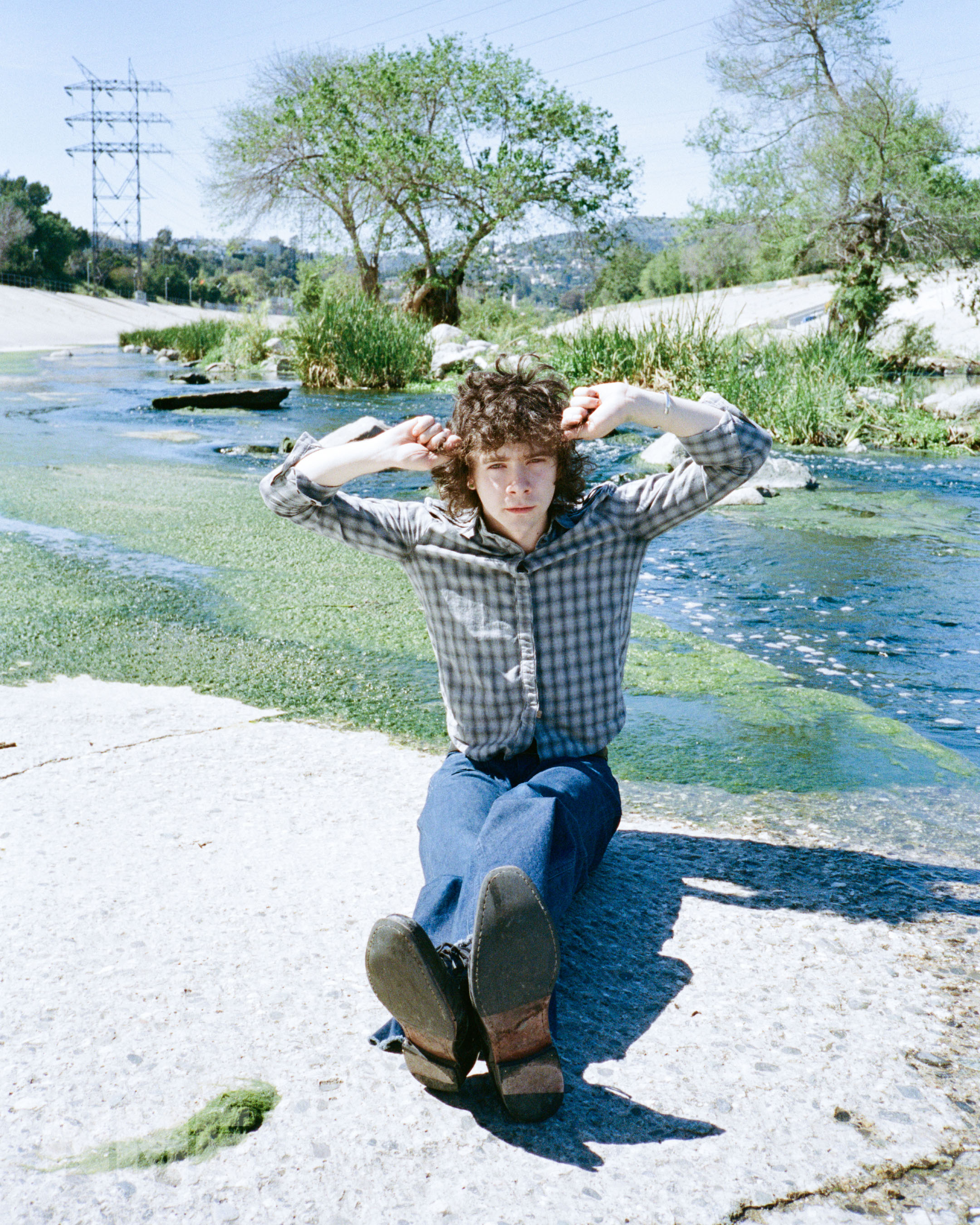
Lifeguard’s current position as a breakout-ready band adds a layer of complexity to their situation. As much as they might resist the long fingers of online hype during their day-to-day interactions with one another and their surroundings, the plaudits keep coming. Tastemakers dig them, critics love them. Slater has even opened up a second front with his acclaimed solo work as Sharp Pins, where he makes impossibly pretty guitar pop songs that are more open in their melodic approach than Lifeguard’s abrasive sandblasting.
“Chicago is one of the best places to see live music in the country right now” – Isaac Lowenstein
There is a thread begging to be pulled in how this dynamic echoes the way Cameron Winter’s none-more-buzzy solo debut ‘Heavy Metal’ set the table for Geese to become the band of the moment with the ensuing ‘Getting Killed’, its success begetting more success. But Slater is unfazed. When asked how the positive reaction to Sharp Pins has affected Lifeguard, his response is to double down on the idea that the process, not the outcome, is what matters. “I got a lot better at recording at home, and then Lifeguard started recording a lot more at home,” he says matter-of-factly.
And, after all, Sharp Pins isn’t the only other side quest in the Lifeguard universe. At one point during our call, Lowenstein pulls out a CD by his electronic project Donkey Basketball, which he’s been working on in parallel to Lifeguard and an engineering degree. It’s essentially blank, its white cardboard sleeve pushing a sense of anonymity. “The disc says eject on it, like, ‘don’t listen!’ This one’s pretty scuffed up, kind of gross, but I’m a big packaging dork, and it has a teeny little business card on it,” he says. “I get to blast people with ridiculous volume and approach music with complete control, which is so wonderful.”

In addition to studying at the Art Institute of Chicago, where they spend much of their time working on furniture and dishware in the fabrication building, Case has also recently recorded an album they’re reluctant to call a ‘solo’ project because of the associated baggage. It’s in the mixing stages at the moment, and Lowenstein can’t get the songs out of his head. “I think that there’s a difference between what we want to get out of the music we play together versus what we want to get out of the music we write for ourselves,” Case observes. “Now, there’s a little bit more confidence – I know who I am outside of this band musically, and when we’re together, it’s a lot easier to be like, ‘OK, this is about what all three of us want.’ That’s hard to find with people.”
There is a head-spinning sort of momentum behind Lifeguard. Not in the sense of a band about to break through to the stratosphere, which they might be, but in the go-go-go nature of people who can’t stop making things. There’s all this unreleased music floating around, and yet they’re already working towards album two, the writing process deeply intertwined with discussions about what they want it to be and how it’ll represent who they are as artists. That matters to Lifeguard. The conventions of modern music? Not so much.
“It’s cool that people like [our music], and we are able to play shows,” Slater says. Lowenstein picks up the baton: “But in terms of our music turning out to be playlistable or whatever? I could take it or leave it.” And Case closes the loop. “I’d rather leave it,” they drawl.
Lifeguard’s ‘Ultra Violence/Appetite’ is out now through Matador.
Listen to Lifeguard’s exclusive playlist to accompany The Cover below on Spotify or on Apple Music here.
Words: Huw Baines
Photography: Atiba Jefferson
Label: Matador Records
The post Lifeguard’s vital noise-punk won’t play by your rules appeared first on NME.