

Watching Cartoon Network in the 1990’s was a treat, but watching in the midnight hours was like being a part of a secret club. A club where animation that didn’t look or act like anything else was the secret password. Each day and year offered different packaged anthologies and curated blocks to experience. Curated showings included Late Night Black & White which contained early 20th century American animation, ToonHeads explored the history of the golden age of American animation, and early Toonami showed off anime. But one in particular has left an outsized impact; O, Canada! This half hour block showed off a compilation of classic animated short films from the Great White North. Unbeknownst to me at the time they were all a product of the the National Film Board of Canada’s animation division, a government sponsored animation powerhouse which modestly came out of the mission to “help Canadians in all parts of Canada to understand the ways of living and the problems of Canadians in other parts”. You too may have seen shorts produced by the board if you attended early Spike & Mike programs or watched any International Animation Day programs. Still in operation today, the NFB’s long history is intricately important to animation, both creating works and giving space to artists across many disciplines and exposing generations of audiences the world over to the lives of experiences of Canadians.
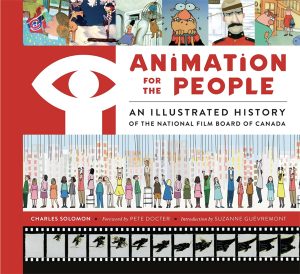 Last November animation historian Charles Solomon, author of many fantastic animation history books, but most recently The Man Who Leapt Through Film: The Art of Mamoru Hosoda (2022) and the upcoming The Art of Cartoon Saloon: 25 Years: The Official Retrospective of the Award-Winning Irish Animation Studio behind The Secret of Kells, Wolfwalkers, and Song of the Sea (July, 2026), has published through Harry N. Abrams a thorough and explorative history of the NFB in, Animation for the People: An Illustrated History of the National Film Board of Canada.
This book is divided into seven chapters and subsequently the history of the film board into roughly decade chunks – from the creation of the NFB and first leadership by John Grierson and the creation of the animation division led by Norman McLaren in 1943, to as recent as the end of the COVID Pandemic in 2022. Each chapter explores notable films and the history of the artists who have made their presence felt through their art.

Jim McCay, in the book, at work on his anti-inflation film, “Bid It Up Sucker” (1944).
Another aspect that Solomon often points back to throughout the text, which ran through McLaren’s intention for the studio, was that the NFB allows and encourages artists to operate as their own independent creator – that the space the NFB created was a space with modest tools to create educational, informative, and artistic expressions that would otherwise not have been. While not opposed to group projects, the preference to give individual artists the space, through legislative governance, to create their own specific vision cannot be overlooked. The hypothetical has always existed, what if we could give artists the opportunity to create within a certain amount of freedom and eight decades of awards and nominations show us what can be accomplished.
Screenshot
The last two decades of the NFB have been marked by progression and instability. As Solomon explains, the constant attack from within the Canadian government has hurt the capabilities of the board, but unionization, gender parity, and new distribution models have helped bolster the ways in which the organization treats the artists that help make it what it is. What will the NFB produce in the next eight decades? If history has anything to say, then we will be shown thoughtfully animated, razor sharp, and authentically Canadian animated shorts for years to come.
Animation for the People: An Illustrated History of the National Film Board of Canada is written by Charles Solomon and is published through Harry N. Abrams and is available now.
Please dive in and enjoy the complete Animation History Bibliography section of the Cartoon Research website. See you next month with another round up of animation book news and reviews!